


Cold weather has a way of flattening everyone’s wardrobe into the same three outfits: jeans and a sweater, jeans and a sweater, jeans and a sweater. If you’re tired of reaching for the same combination every time the temperature drops, there’s a piece that solves comfort and style problems at once, and most people own exactly zero of them.
The sweater dress. One garment, minimal effort, and it works for men and women, casual days and dressed-up ones alike. Here’s everything you need to know before you buy one or before you finally wear the one sitting in the back of your closet.
What Is a Sweater Dress?
A sweater dress is a knit garment that combines the comfort and texture of a sweater with the length and shape of a dress. It’s usually made from wool, cotton, or acrylic blends, and it can stand on its own as a full outfit or get layered underneath a coat for extra warmth.
The knit is what sets it apart from a regular dress. Depending on the style, you’ll see ribbed knits, chunky cable patterns, or fine-gauge fabric that drapes closer to the body. Some come with turtleneck or cowl necklines built in, which adds a second layer of warmth without needing a scarf.
A Brief History of the Sweater Dress
Sweater dresses started as practical cold-weather clothing thick, warm, and built for function rather than fashion. That changed in the 1970s and 80s, when designers began cutting knitwear into more fitted, dress-like shapes, and the piece moved from purely functional to something people wore on purpose, not just out of necessity.
It faded in and out of trend cycles through the 90s and 2000s, then came back strong in recent years as part of the broader shift toward minimalist, comfort-first fashion. Right now it sits at an easy intersection: it looks put-together without requiring much effort, which is probably why it never really goes away for long.
Types of Sweater Dresses
Not all sweater dresses are built the same, and the differences matter once you’re trying to shop for one.
By Knit Style
- Ribbed knit — closer-fitting, stretchy, and good for a more streamlined silhouette
- Cable knit — thicker and more textured, with a classic, slightly preppy look
- Turtleneck dress — built-in high neckline for extra coverage and warmth
- Cowl neck — a looser, draped neckline that softens the overall shape
By Silhouette
- Bodycon/fitted — hugs the body, often paired with boots for a polished look
- Oversized/relaxed — roomier fit, leans casual and comfortable
- A-line — fitted through the shoulders and looser toward the hem, flattering on most body types
- Length options — mini, midi, and maxi versions all exist, with midi being the most versatile for everyday wear
How to Style a Sweater Dress: Women’s Edition
Casual, Everyday Looks
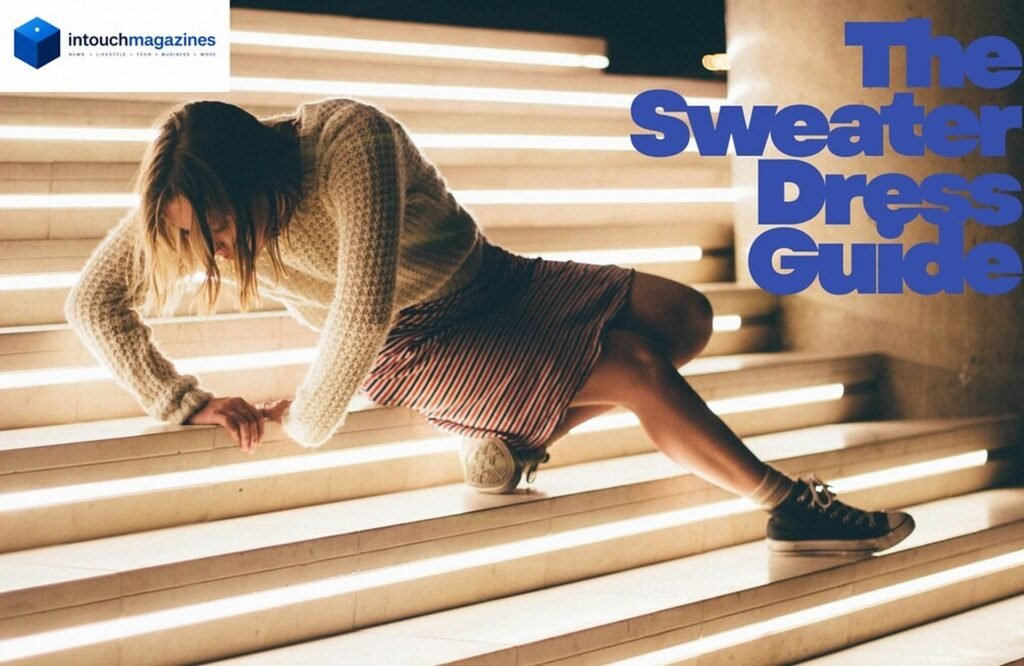
For running errands or a low-key day out, pair a sweater dress with white sneakers and a crossbody bag. It reads relaxed without looking sloppy. Throwing on a denim jacket over top adds texture and works well during the shoulder seasons when temperatures haven’t fully dropped yet.
Business Casual and Elevated Looks
A blazer instantly changes the tone of a sweater dress, turning it into something appropriate for the office. Ankle boots keep it grounded and professional. If the dress runs a bit loose, a thin belt at the waist adds shape and structure without much effort.
Seasonal Layering
Tights and tall boots make a sweater dress work through the coldest months, while a lighter version paired with sneakers or loafers transitions well into early fall. The dress itself doesn’t need to change — just what you build around it.
How to Style a Sweater Dress: Men’s Edition
Men’s fashion doesn’t typically use the term “sweater dress” the same way, but longline sweaters styled to fall past the hip have become a popular piece in modern, relaxed menswear — especially within streetwear and minimalist style circles.
Longline Sweaters as a Layering Piece
These oversized knit pieces work best over slim trousers or leggings, creating a longer, layered silhouette. It’s a look that’s grown especially popular in gender-fluid and minimalist fashion spaces, where proportion matters more than strict category labels.
Fit and Shopping Tips
The key is proportion pair something oversized on top with something fitted on the bottom, or the whole outfit reads baggy instead of intentional. Look for knitwear labeled “longline” or “tunic sweater” when shopping, since that’s usually the closest equivalent to a dress-length piece in men’s collections.
Choosing the Right Sweater Dress for Your Body Type
There’s no single “correct” way to wear a sweater dress, but a few general guidelines help:
- Petite frames tend to look best in fitted or A-line styles that avoid overwhelming a smaller frame — bulky, oversized knits can swallow up a shorter build.
- Tall frames can usually handle both oversized and fitted styles, and have the most flexibility with length.
- Curvy figures often benefit from ribbed or fitted knits that follow the body’s natural shape rather than boxy, shapeless cuts.
- Athletic builds tend to look sharp in cowl neck or cable knit styles, which add visual softness and texture.
Fabric weight matters here too. A heavy, chunky knit adds bulk, while a finer-gauge sweater dress drapes closer to the body and tends to be more universally flattering.
Occasions to Wear a Sweater Dress
It’s a rare piece that works across almost every setting, with small adjustments:
- At work — pair with a blazer and closed-toe shoes for a polished, professional look
- On weekends — sneakers and a casual jacket keep it relaxed
- On a date — swap sneakers for heels or boots, add jewelry, and it moves easily into evening territory
- For the holidays — a cable knit or ribbed style in a rich color works well for family gatherings or holiday parties
Sweater Dress Care and Maintenance
Knitwear needs a bit more attention than your average cotton dress, and skipping proper care is the fastest way to ruin one.
Washing
Check the label first, but most sweater dresses do better hand-washed in cold water rather than tossed in the machine. If you do use a machine, choose a gentle or delicate cycle and place the dress in a mesh bag to reduce friction and pulling.
Drying and Storage
Never hang a sweater dress to dry the weight of the wet fabric stretches it out permanently. Lay it flat on a towel instead. For storage, fold rather than hang; hangers create shoulder bumps and stretch the neckline over time.
Frequently Asked Questions
Yes, with the right styling. A fitted or A-line sweater dress paired with a blazer and closed-toe shoes reads as business casual in most office settings.
Ankle boots and knee-high boots are the most common pairing, especially in colder months. Sneakers work for casual looks, and heels dress it up for evening.
Not typically in the traditional sense, but longline and tunic-style sweaters serve a similar function in men’s fashion, especially when layered over slim trousers or leggings.
Choose a style with some stretch and structure through the hips, and consider wearing shorts or leggings underneath for both comfort and coverage.
A sweater dress is generally longer, falling to the mid-thigh or knee, and meant to be worn on its own. A tunic is usually shorter and often designed to be layered over pants or leggings.
The Bottom Line
A sweater dress earns its place in a wardrobe by doing double duty it’s warm enough for cold days and put-together enough to skip the “what am I wearing” debate most mornings. Whether you’re layering one under a coat for the office or throwing on sneakers for a weekend errand, it’s one of the few pieces that adapts to whatever the day needs.