


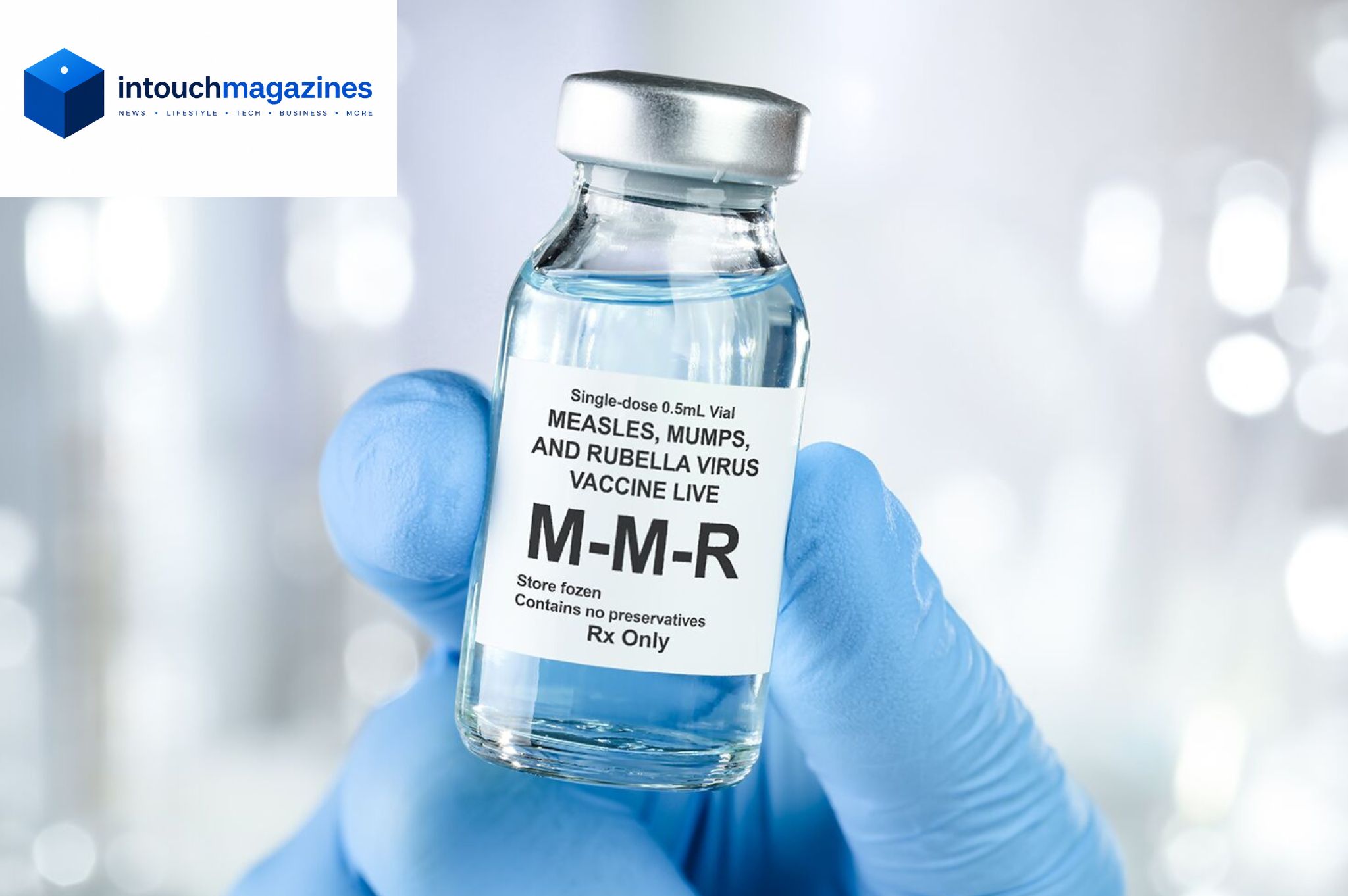
President Donald Trump signed an executive order directing officials to break up the combined measles, mumps, and rubella (MMR) vaccine into three separate shots. Doctors would give each shot at a separate visit. The announcement reignited a debate Trump has pushed publicly for nearly a year. But it also ran headlong into a hard scientific and regulatory reality: standalone measles, mumps, and rubella vaccines don’t currently exist in the United States. Building them from scratch could take a decade or more.
For parents, patients, and anyone trying to sort fact from political rhetoric, here’s what the order actually says. We’ll cover why public health experts are pushing back so hard, and what if anything changes for your family right now.
What Is Trump’s Plan for the MMR Vaccine?
The Executive Order, Explained
The order calls for the combined MMR vaccine to eventually become three separate single-disease shots, “once such products are domestically available.” It also recommends that doctors give childhood immunizations at separate medical visits rather than combined appointments. The administration framed the order as part of a broader “gold standard” childhood vaccination framework. That framework also reclassifies several existing vaccines into “high risk” or “shared decision-making” categories.
The push isn’t new. Nearly a year before signing the order, Trump posted on his social media platform that the MMR vaccine should be broken up “INTO THREE TOTALLY SEPARATE SHOTS (NOT MIXED!)” Health Secretary Robert F. Kennedy Jr. has spent years questioning the safety of the combined shot, and he has also shaped this policy. His handpicked vaccine advisers called for splitting up the MMR shot last fall.
What “Splitting” the Vaccine Would Actually Mean
Doctors have given the MMR vaccine as a single combined shot in the U.S. for decades. Standalone shots for measles, mumps, or rubella individually are not currently available on the market. That means a parent can’t simply request three separate doses instead of one MMR shot today. To offer that option, manufacturers would need to develop, test, and win FDA approval for three entirely new vaccine products.
Why Experts Say This Could Take a Decade
This is the core of the story, and it’s worth stating plainly and clearly:
Public health experts, including the American Academy of Pediatrics, say developing standalone measles, mumps, and rubella vaccines would likely take more than a decade and cost manufacturers millions of dollars because each shot would require its own clinical trials, safety data, and FDA approval from the ground up.
No Existing Product to Fall Back On
Standalone versions aren’t currently manufactured or sold in the U.S. That means companies can’t simply relabel or repackage an existing product. The American Academy of Pediatrics has publicly stated it would take a decade to create a separate vaccine for each part of the MMR shot.
The Clinical Trial and FDA Approval Process
Any new standalone vaccine would need to go through the FDA’s full pipeline, even for a disease that’s been preventable for decades. That pipeline includes preclinical research, multi-phase human trials, and a formal approval review. This process alone often spans close to a decade for an entirely new product and that’s before manufacturing or funding hurdles even enter the picture.
Manufacturers Have Little Incentive to Build Them
This is where the timeline problem gets even more difficult. Merck and GSK make the current MMR vaccine, and they appear to have little incentive to develop standalone shots, since doing so would divert significant time and resources from other drug development work. Johns Hopkins epidemiologist William Moss put it bluntly: I don’t see any world in which vaccine manufacturers have any interest in developing and going through the rigorous regulatory process, getting FDA approval, doing the trials for monovalent measles, mumps, and rubella vaccines. He added that pursuing it would be “a foolish investment” for a company to make.
Put together, these hurdles mean any standalone shots that eventually reach the market would likely arrive long after Trump’s current term in office has ended.
What Public Health Experts Are Saying
There’s No Scientific Case for Splitting the Shot
The CDC has delivered perhaps the most direct pushback. The agency states that no published scientific evidence shows any benefit in separating the combination MMR vaccine into three individual shots. The CDC does note a very small risk of febrile seizures and rare serious allergic reactions with the combined shot. But it emphasizes that getting the MMR vaccine is much safer than getting measles, mumps, or rubella themselves.
Dr. Paul Offit, a vaccine scientist at Children’s Hospital of Philadelphia, agrees that splitting the shot doesn’t improve safety at all. In his words, breaking the vaccine into three doses doesn’t make the vaccine safer, and it means children are probably less likely to finish all those shots while making the experience more painful for the child in the process.
Splitting the Shot Could Lower Vaccination Rates
This is the consequence experts worry about most. Three separate visits and three separate needle sticks raise the practical bar for full protection, instead of just one. And the U.S. is already seeing warning signs on this front. The share of parents willing to use the MMR shot has already declined. AAP president Dr. Andrew Racine linked that trend to the recent resurgence of measles cases nationwide, noting that the U.S. has logged its highest number of measles cases in decades this year. A 2025 KFF/Washington Post survey found roughly 9% of parents report skipping or delaying the MMR vaccine for their children.
Sen. Bill Cassidy (R-La.) is a physician and chairman of the Senate health committee, and he offered similarly direct criticism. He warned on social media that breaking up vaccines will mean children have to get more shots to get the same protection, not fewer shots. It will increase hesitancy and make children less safe. He also called the executive order itself wrong, writing: I’m a doctor. This executive order is wrong. The President does not have the expertise to make these changes. Vaccines are overwhelmingly safe and effective. Vaccines DO NOT cause autism.
The Autism Claims Behind the Push
Much of the rationale behind splitting the vaccine traces back to unproven claims linking the combined MMR shot to autism. Public health officials have debunked these claims for decades. Trump has repeated versions of this theory publicly. At one point, he suggested the combined shot could be quite lethal together but safe when given separately, without offering supporting evidence. Experts, including some who spoke to CNN, noted that there is no evidence the combined MMR vaccine is dangerous to give together. Investigators have traced the origins of the autism-MMR theory to a discredited 1998 study by British gastroenterologist Andrew Wakefield. Researchers later retracted that study after finding it fraudulent.
What This Means for Parents and Patients Right Now
Is the Current MMR Vaccine Still Available and Recommended?
Yes. Nothing changes immediately. Parents across the country are unlikely to see any immediate impact on vaccine access, and legal challenges to the executive order are likely. The combined MMR shot remains the only version available. It continues to be the CDC-recommended standard for protecting children against measles, mumps, and rubella.
It’s also worth remembering what’s at stake without it. Before the measles vaccine existed, measles killed roughly 400 to 500 people in the U.S. each year and hospitalized about 48,000. Today, thanks to widespread vaccination, that number is close to zero. Health officials had declared measles eliminated in the U.S. before this year’s resurgence.
What to Watch for Going Forward
Standalone vaccines don’t yet exist, so parents don’t need to take any near-term action. Key developments to watch include whether any manufacturer signals interest in developing standalone shots, how legal challenges to the executive order play out, and whether the CDC’s official vaccination guidance changes as a result. For now, the combined MMR vaccine remains the safest, most protective option on its existing schedule.
Frequently Asked Questions
Combining the measles, mumps, and rubella vaccines into a single shot reduces the number of injections and doctor visits needed for full protection, which historically has helped improve vaccination completion rates.
No. Standalone versions of these vaccines are not currently manufactured or sold in the United States. Only the combined MMR shot is available.
Not in the near future. Experts estimate it would take more than a decade for manufacturers to develop, test, and gain FDA approval for standalone vaccines, and the companies that make the current MMR shot have shown little interest in doing so.
According to the CDC, there is no published scientific evidence showing a benefit to separating the MMR vaccine, and the combined shot is considered far safer than contracting measles, mumps, or rubella.
Key Takeaways
- Trump’s August 2026 executive order calls for splitting the MMR vaccine into three separate shots, but standalone versions don’t currently exist.
- The American Academy of Pediatrics and other experts estimate it would take more than a decade to develop, test, and win FDA approval for standalone shots.
- Vaccine manufacturers Merck and GSK have shown little financial incentive to pursue the project.
- The CDC states there’s no scientific evidence that splitting the vaccine offers any safety benefit.
- Experts warn that requiring three separate visits could lower vaccination completion rates and worsen the ongoing measles resurgence.
- Nothing changes for parents immediately the combined MMR vaccine remains available and recommended.
This is a developing policy story. Guidance and legal outcomes may change check CDC.gov for the most current childhood vaccination recommendations.