


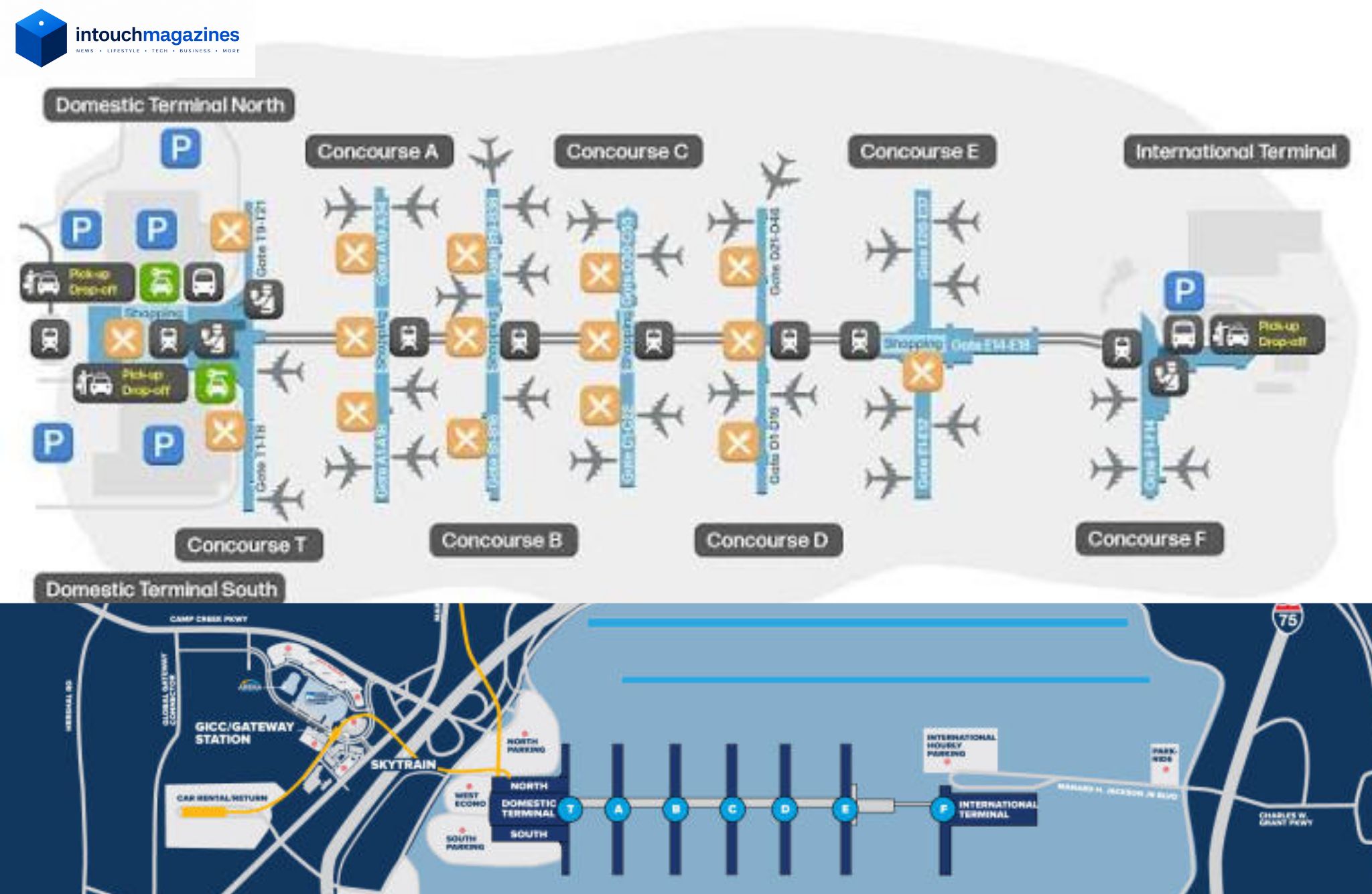
Hartsfield-Jackson Atlanta International Airport isn’t just another stop on your itinerary it’s consistently ranked among the busiest airports in the world, meaning millions of travelers pass through its terminals every year, often mid-layover with a tight connection to catch.
If the idea of navigating a massive, unfamiliar airport feels overwhelming, you’re not alone. This guide covers everything you need to know about Atlanta Airport from terminal layout and getting between concourses, to parking, dining, and tips for making even the tightest layover stress-free. Whether it’s your first time through ATL or your fiftieth, here’s what to expect.
About Hartsfield-Jackson Atlanta International Airport
Airport Code and Location
Hartsfield-Jackson Atlanta International Airport, commonly known by its airport code ATL, is located about 10 miles south of downtown Atlanta, Georgia. It’s easily accessible from the city center by car, rideshare, or public transit.
Why Atlanta Airport Is So Busy
ATL’s reputation as one of the busiest airports globally comes down to two main factors: it serves as the largest hub for Delta Air Lines, and its central geographic location makes it a natural connecting point for flights across the U.S. and internationally. This combination results in an enormous volume of both origin/destination travelers and passengers simply passing through on a layover.
Atlanta Airport Terminal Layout Explained
Domestic Terminal (Concourses T, A, B, C, D, E)
ATL’s domestic terminal is organized into concourses labeled alphabetically: T, A, B, C, D, and E. Concourse T is closest to the main terminal, with concourses extending outward in alphabetical order. Understanding this layout in advance can make navigating gate changes or connections significantly less stressful.
International Terminal (Concourse F)
International flights operate primarily out of Concourse F, which includes its own customs and immigration processing area. If you’re connecting from an international flight to a domestic one (or vice versa), it’s important to factor in extra time for this process.
How to Get Between Concourses (The Plane Train)
ATL operates an underground train system often referred to as the “Plane Train” or ATL Skytrain — that connects all concourses, including the international terminal. This is generally the fastest and most reliable way to move between concourses, especially during a tight connection, rather than trying to walk long terminal distances.
How to Navigate a Layover at Atlanta Airport
To navigate a layover at Atlanta Airport: check your connecting gate immediately upon deplaning, use the Plane Train to move between concourses efficiently, allow at least 45–60 minutes for domestic connections, and budget extra time if traveling through the international terminal (Concourse F) due to potential customs processing.
Minimum Recommended Connection Times
While specific minimum connection times can vary by airline and ticket type, general guidance includes:
- Domestic-to-domestic connections: allow at least 45–60 minutes when possible, especially if concourses are far apart
- International connections: budget significantly more time due to customs and immigration processing, particularly if arriving from Concourse F
- Real-time gate checks: rely on in-airport monitors or your airline’s app for live gate updates, rather than assuming your boarding pass gate is final gate changes are common in large hub airports
Getting To and From Atlanta Airport
MARTA (Public Transit)
MARTA (Metropolitan Atlanta Rapid Transit Authority) offers a direct rail connection between the airport and downtown Atlanta. It’s widely used by travelers for its affordability and convenience, particularly for those without checked luggage or heavy bags, and it avoids potential traffic delays on the road.
Rideshare, Taxi, and Shuttle Options
Rideshare services and taxis operate from designated pickup zones at the airport, typically clearly marked and separate from the terminal curb to manage traffic flow. Many hotels and off-site parking facilities also offer dedicated shuttle service.
Driving and Parking Options
ATL offers multiple parking tiers, generally including economy, daily, and hourly options at varying price points and proximity to the terminal. Economy lots tend to be the most budget-friendly but require a shuttle to reach the terminal, while daily and hourly lots offer closer proximity at a higher cost.
Where to Eat and Shop at Atlanta Airport
ATL offers a broad mix of dining and retail options, including both Atlanta-based local restaurants and familiar national chains, spread across its various concourses. It’s worth noting that specific options can vary significantly depending on which concourse you’re in, so travelers with a favorite spot in mind should check its exact location in advance.
For those with a tight connection, grab-and-go options are available throughout most concourses, while travelers with a longer layover have more flexibility to enjoy a sit-down meal.
Atlanta Airport Security and TSA Tips
TSA PreCheck and CLEAR Availability
ATL offers both TSA PreCheck and CLEAR lanes, which can significantly reduce wait times for enrolled travelers. If you fly frequently, enrolling in one or both programs can make a noticeable difference at a high-traffic airport like ATL.
Typical Security Wait Times
Security wait times can vary considerably depending on time of day and season, with early mornings and holiday periods typically seeing the highest volume. It’s also worth knowing that ATL has security checkpoints at multiple concourses rather than a single centralized checkpoint, so your wait time can vary depending on where you enter.
Hotels Near Atlanta Airport
For travelers with an overnight layover or an early morning flight, several hotel options are available both on-site and in close proximity to the airport. Many off-site hotels offer complimentary shuttle service to and from the terminal. Price ranges vary from budget-friendly chain hotels to higher-end business-class options, giving travelers flexibility based on comfort level and budget.
Tips for a Smooth Trip Through Atlanta Airport
A few simple habits can make navigating ATL considerably easier:
- Download the airport’s official app or your airline’s app for real-time gate updates
- Arrive with extra buffer time, given the airport’s size and passenger volume
- Familiarize yourself with the alphabetical concourse system before you arrive
- Use the Plane Train rather than walking for long concourse-to-concourse transfers, especially when time is limited
Frequently Asked Questions
The airport code for Hartsfield-Jackson Atlanta International Airport is ATL.
ATL is one of the largest airports in the world by both physical size and passenger volume, spanning multiple concourses connected by an underground train system.
ATL is consistently ranked among the busiest airports globally by passenger traffic, largely due to its role as Delta Air Lines’ primary hub and its central U.S. location.
The fastest way to move between concourses at ATL is via the underground Plane Train (ATL Skytrain), which connects all domestic concourses as well as the international terminal.
Given the airport’s size and typical passenger volume, it’s generally recommended to arrive at least two hours before a domestic flight and three hours before an international flight, though this can vary based on your airline’s specific guidance.
Final Thoughts
Hartsfield-Jackson Atlanta International Airport’s sheer scale can feel intimidating at first glance, but with a bit of preparation, most travelers move through it smoothly. Understanding the concourse layout, using the Plane Train for connections, and building in a reasonable buffer for your connection time are the key factors that make the difference between a stressful layover and an easy one.
Whether you’re passing through for a quick connection or spending a longer layover exploring Atlanta itself, a little planning goes a long way at one of the world’s busiest airports.