


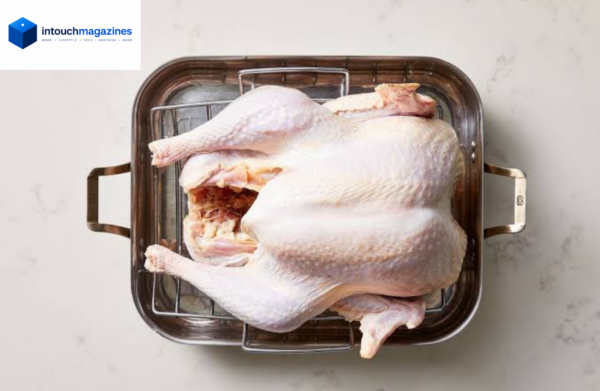
The oven light glows amber against the kitchen window. Somewhere upstairs, the house is stirring footsteps, laughter, the low hum of a football game. But down here, everything comes down to one number: how much longer until that turkey is done.
Getting turkey cooking time right is the difference between a golden, glistening centerpiece that draws applause when it hits the table, and a bird that’s either dangerously undercooked or dried out from too many extra minutes “just to be safe.” The good news is that turkey timing isn’t a mystery it’s math, method, and one reliable thermometer reading away from certainty.
This guide breaks down exactly how long to cook a turkey based on its weight, whether it’s stuffed, and which cooking method you’re using so you can stop guessing and start carving with confidence.
Why Turkey Cooking Time Isn’t One-Size-Fits-All
Every turkey behaves a little differently in the oven, which is why a single “cook for X hours” answer can lead you astray. Several variables shift the clock significantly.
Factors That Affect Roasting Time
- Weight of the bird — the single biggest factor; every additional pound adds roasting time.
- Stuffed vs. unstuffed — a stuffed cavity insulates heat differently and requires longer cooking to bring the stuffing itself to a safe temperature.
- Oven temperature accuracy — home ovens can run 15–25°F hotter or cooler than their display, throwing off even a carefully planned timeline.
- Fresh vs. fully thawed frozen turkey — a turkey with any remaining ice in the cavity will cook unevenly and take longer.
- Bone-in vs. boneless or spatchcocked — removing the backbone and flattening the bird dramatically speeds up cooking.
Why Guessing Leads to Dry Meat or Undercooked Centers
Turkey continues cooking even after it leaves the oven a phenomenon called carryover cooking, where residual heat raises the internal temperature by several more degrees during resting. Pull the bird based on the clock alone, without accounting for carryover, and you risk either an undercooked center or, more commonly, an overcooked, dry breast from compensating too cautiously. Frequently opening the oven door to check on the bird also drops the internal temperature and extends cooking time unpredictably, while poor rack positioning can lead to uneven browning and inconsistent doneness between the breast and thighs.
Turkey Cooking Time Chart (By Weight)
As a general rule, roast an unstuffed turkey at 325°F for about 13 minutes per pound, and a stuffed turkey for about 15 minutes per pound.
| Turkey Weight | Unstuffed (325°F) | Stuffed (325°F) |
|---|---|---|
| 8–12 lbs | 2¾ – 3 hours | 3 – 3½ hours |
| 12–14 lbs | 3 – 3¾ hours | 3½ – 4 hours |
| 14–18 lbs | 3¾ – 4¼ hours | 4 – 4¼ hours |
| 18–20 lbs | 4¼ – 4½ hours | 4¼ – 4¾ hours |
| 20–24 lbs | 4½ – 5 hours | 4¾ – 5¼ hours |
These ranges assume a fully thawed bird roasted at a consistent 325°F. Always treat the chart as a planning tool, not a substitute for checking internal temperature near the end of the estimated window.
How to Calculate Turkey Cooking Time Per Pound
The Simple Formula
The minutes-per-pound method is straightforward: multiply the turkey’s weight by 13 (unstuffed) or 15 (stuffed) minutes.
Example: A 16-pound unstuffed turkey. 16 lbs × 13 minutes = 208 minutes, or roughly 3 hours 28 minutes at 325°F.
This gives a solid starting estimate but the formula is only the first step, not the final word.
Using a Meat Thermometer (The Only Truly Reliable Method)
No formula accounts for your specific oven, your specific bird, or how well-insulated your kitchen is on a cold day. A meat thermometer removes the guesswork entirely.
The turkey is safe to eat once it reaches an internal temperature of 165°F, measured in the thickest part of the thigh, without touching bone. For the most accurate reading, check both the thigh and the deepest part of the breast both should reach at least 165°F, though many cooks pull the breast slightly earlier to account for carryover cooking, since the thigh typically finishes last.
Cooking Time by Method (Beyond the Standard Oven Roast)
Not every kitchen or every cook sticks to the classic low-and-slow roast. Here’s how timing shifts across popular alternative methods.
Spatchcocked (Butterflied) Turkey Time
Removing the backbone and flattening the turkey exposes more surface area to heat, cutting cooking time to roughly 90 minutes to 2 hours for a standard-sized bird, while also promoting more even browning across the whole turkey.
Deep-Fried Turkey Time
Deep frying is dramatically faster, at approximately 3 to 4 minutes per pound, submerged in oil heated to 350°F. This method demands strict safety precautions, including a fully thawed and dried bird and outdoor frying away from any structures, due to the fire risk posed by oil and moisture.
Smoked Turkey Time
Smoking at a lower temperature of 225–250°F extends cooking to roughly 30 to 40 minutes per pound, rewarding patience with deep smoky flavor and a richly colored skin.
Convection Oven Turkey Time
Convection ovens circulate hot air, cooking turkey roughly 25% faster than a conventional oven at the same temperature setting meaning the standard chart above should be adjusted downward, with frequent temperature checks starting earlier than expected.
Step-by-Step: How to Roast a Turkey to Perfect Timing
Before the Oven
A turkey needs ample time to thaw safely generally 24 hours per 4–5 pounds in the refrigerator. Letting the bird sit at room temperature for 30–60 minutes before roasting helps it cook more evenly, while patting the skin dry contributes to that deep golden color.
During Roasting
Tenting the breast loosely with foil partway through roasting prevents over-browning while the thighs finish cooking. Basting is largely a matter of tradition rather than necessity it doesn’t meaningfully speed cooking and requires opening the oven, which lowers the temperature each time. Positioning the rack in the lower third of the oven allows heat to circulate evenly around the entire bird.
The Rest Period
Resting the turkey for 20 to 30 minutes after removing it from the oven allows the juices to redistribute throughout the meat rather than spilling out the moment it’s carved. This rest period is also when carryover cooking finishes raising the internal temperature those final few degrees.
Common Turkey Cooking Time Mistakes to Avoid
- Cooking straight from frozen — this leads to wildly uneven cooking and an unsafe center.
- Relying solely on the pop-up timer — these built-in indicators are often imprecise and can pop well before or after the bird is truly done.
- Ignoring oven calibration differences — an oven thermometer is a worthwhile investment for accuracy.
- Pulling the turkey too late — waiting for the pop-up timer or an arbitrary “safe-feeling” time often results in a dry, overcooked bird when a thermometer would have signaled doneness earlier.
Frequently Asked Questions
At 325°F, a 20-pound unstuffed turkey takes approximately 4¼ to 4½ hours; a stuffed 20-pound turkey takes about 4¾ hours.
325°F is the standard recommendation because it cooks the turkey evenly without over-browning the skin before the interior finishes. 350°F shortens cooking time slightly but increases the risk of a dry exterior.
While a thermometer is strongly recommended, visual cues include juices running clear (not pink) when the thigh is pierced, and legs that move freely at the joint. These signs are far less reliable than a temperature reading.
No, foil is typically added partway through roasting, once the breast reaches the desired color, to prevent over-browning while the rest of the bird finishes cooking.
Final Thoughts: Trust the Thermometer, Not Just the Clock
There’s a particular kind of satisfaction in lifting a golden-skinned turkey from the oven exactly when it’s meant to come out not a minute too soon, not a minute too late and setting it at the center of a table full of people waiting to dig in. The chart, the formulas, and the method-by-method breakdowns above will get you remarkably close. But the final word always belongs to the thermometer reading 165°F in the thigh. Time gets you to the doorway; temperature confirms you’ve arrived.


1 Comment
Pingback: School Breakfast Pizza: History, Recipe & Nutrition Facts